Quick Answer
The most common plumbing problems in UK homes are dripping taps, blocked drains, low water pressure, running toilets, and leaking pipes or joints.
Some are quick jobs you can safely tackle yourself (plunging a slow drain, cleaning a limescale-clogged tap aerator, or replacing a worn tap washer), while others, like a hidden leak, a burst pipe, or no hot water, need a professional.
In hard-water areas like West London, limescale is behind a surprising amount of it, restricting the flow at individual taps and shower heads. The golden rule: if a problem risks flooding, or it involves your gas boiler, turn the water off at your stopcock and call a qualified engineer rather than chance it. We handle plumbing and emergency plumbing across West and North West London. Our engineers are Gas Safe registered (657972), tidy and straight-talking.
Most household plumbing trouble falls into a handful of familiar problems. Below we run through each one: what causes it, whether it’s safe to fix yourself, and the point at which it’s worth calling an engineer. We’ve also pulled it all together in a quick reference table near the end.
Key Takeaways
- Most common household plumbing issues stem from worn washers, mechanical seal failure, or heavy hard-water limescale accumulation.
- Clean tap aerators and showerheads with white vinegar before assuming you have whole-house low water pressure.
- Never pour caustic chemical drain cleaners into older Victorian waste pipework; mechanical plunging or trap clearing is safer.
- The insight competitors miss: distinguish between fresh-water scale at outlets and black magnetite sludge inside heating circuits.
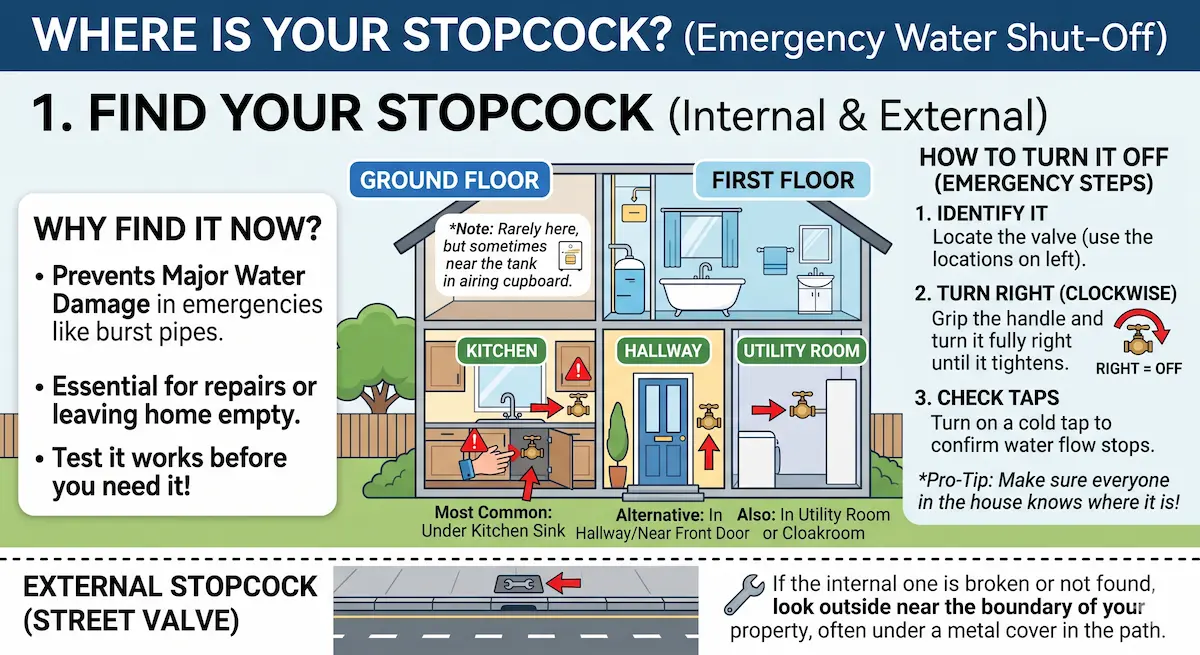
- If multiple fixtures back up simultaneously or you suspect an internal leak, isolate your stopcock immediately and call our team.
How London’s hard water causes plumbing problems
London’s water passes through chalk and limestone on its way to your taps, and Thames Water states plainly that all the water in its region is hard. Their own classification puts 200 to 300 mg/l of calcium carbonate in the “hard” band and anything above 300 in “very hard”; you can look up the figure for your postcode on their site.
Limescale forms wherever that fresh mains water is heated or left standing, and the effect you’ll notice most directly is at the outlets: it clogs tap aerators and shower heads, restricting the flow at that particular tap or shower. Scale deposits around tap internals can also stop a worn washer or cartridge seating cleanly, though a drip is just as often ordinary wear. It’s why the same handful of problems crop up again and again in homes from Kensington to Wembley.
Worth keeping straight: limescale belongs to the fresh-water side of your home. The black sludge that settles inside a sealed central-heating circuit is a different substance entirely. It is corrosion debris, not scale, and it needs a different fix, which is a job for boiler repairs rather than a descaler.
Dripping taps
A dripping tap is usually caused by a worn washer, a perished O-ring, or a cartridge that’s past its best. In a hard-water area, scale deposits around the tap internals can stop those parts seating cleanly, which doesn’t help. It’s not just annoying: a steady drip runs day and night, and it tends to get worse rather than better as the washer wears further. Most drips are a safe DIY fix: turn off the water at the isolation valve under the basin (or the main stopcock), unscrew the tap, and replace the washer or cartridge. If the tap body is corroded, the drip returns, or you can’t isolate the supply, call a plumber.
Blocked drains
Blocked drains are one of the problems we get called about most, and a slow single drain is often the easiest to clear yourself. Start mechanically. Lift out and clear any visible debris from the plughole, the sink strainer or the shower trap. Hair and grease account for a lot of kitchen and bathroom blockages. Then use a plunger: get a firm seal over the outlet and pump steadily for 20 to 30 seconds, repeating a few times.
What we’d avoid is drain chemicals. They can damage older pipework, and mixing products is genuinely dangerous. Stop and call a professional if more than one fixture is affected, if there’s any smell of sewage, or if the blockage keeps coming back after clearing. Those point to something further down the line that a plunger won’t reach.
Low water pressure
First work out whether it’s one outlet or the whole house, because they’re two different problems.
Weak flow at one tap or shower is often limescale in that outlet’s aerator or shower head. The easy win is to unscrew the aerator from the end of the tap, soak it in white vinegar to dissolve the scale, and refit it; the same works for a shower head.
Low pressure everywhere is not a descaling job. Start by checking the main stopcock is fully open, since a partly closed valve is a common and easily missed cause. If it’s still low throughout the house, that can point to a mains supply issue or a hidden leak, and it’s worth having properly investigated rather than guessed at.
Running or leaking toilet
A toilet that won’t stop running is usually a worn flush valve (flapper) or a misadjusted float in the cistern. It’s a common fix and a quiet water-waster. Lifting the lid and adjusting or replacing the float or flush valve is manageable for many homeowners with an off-the-shelf part. If water is leaking from the base of the toilet, the pan seal or connection may have failed, and that’s worth getting a plumber to sort before it damages the floor.
Leaking pipes and joints
Leaks tend to show up at compression joints under the sink, or on older pipework, and West London’s period homes often have ageing or imperial-sized pipes that need care. For a minor drip at a visible joint, turn off the water and tighten the fitting gently; catch any water in a bowl. But a hidden leak (damp patches, unexplained water-meter movement, a musty smell) or a leak you can’t reach or stop needs a professional quickly, before it causes real damage. When in doubt, turn off the stopcock and call us.
No hot water
No hot water usually points to the boiler or heating system rather than the plumbing itself. The cause could be a fault with the boiler, a stuck diverter valve, low pressure, or an airlock. This is not a DIY job: it often involves the gas boiler, which only a Gas Safe registered engineer should touch. If you’ve checked the obvious (power on, boiler pressure in the green, thermostat up) and still have no hot water, it’s time for boiler repairs.
Frozen or burst pipes
In a cold snap, water in exposed or poorly insulated pipes can freeze, expand, and burst. It is one of the most damaging plumbing emergencies there is. Prevention is best: lag exposed pipes and keep the heating ticking over in very cold weather. If a pipe bursts, turn off the water at your internal stopcock immediately, switch off the electrics near any leak, catch what you can, and call an emergency plumber straight away. This is never a wait-and-see situation.
Can you fix it yourself, or call a plumber?
As a rule of thumb, simple, contained jobs with the water safely isolated are fine to try; anything involving gas, hidden leaks, flooding risk, or a problem that keeps coming back is one for a professional. Here’s the quick reference:
Dripping tap
Usually
Isolate water, replace washer/cartridge
Tap is corroded or the drip returns
Blocked drain (one fixture)
Usually
Clear visible debris, then plunge
Repeated, multiple fixtures, or sewage smell
Weak flow at one outlet
Often
Descale that aerator or shower head
It doesn’t improve after descaling
Low pressure across the house
Sometimes
Check the stopcock is fully open
Still low everywhere, or a suspected leak
Running toilet
Sometimes
Adjust/replace float or flush valve
Leaking from the base, or fix doesn’t hold
Leaking joint
Sometimes
Isolate water, gently tighten the fitting
Hidden leak, damp patches, or can’t stop it
No hot water
No
Check power, pressure, thermostat
Anything boiler/gas-related, always
Burst pipe
No (emergency)
Stopcock off, electrics off near leak
Always. Call immediately
If a job lands in the “call a plumber” column, we’ll give you a free, no-obligation fixed quote. See plumbing services for everyday jobs or emergency plumbing when it can’t wait.
Frequently asked questions
What are the most common plumbing problems in the home?
Dripping taps, blocked drains, low water pressure, running toilets and leaking pipes or joints come up most often in UK homes. Several are contained jobs you can safely tackle yourself once the water is isolated. Others, such as hidden leaks, no hot water, or anything involving your gas boiler, need a qualified professional rather than a DIY attempt.
Can I fix a dripping tap myself?
Often, yes. Turn off the water at the isolation valve or stopcock, then replace the worn washer or cartridge. If the tap body is corroded, you can’t isolate the supply, or the drip comes back, it’s worth calling a plumber.
Why is my water pressure low?
Check whether it’s one outlet or the whole house first. Weak flow at a single tap or shower is often limescale in that aerator or shower head, and descaling it usually helps. Low pressure everywhere is a different problem: check the stopcock is fully open, then have a mains issue or hidden leak investigated.
How do I unblock a drain without chemicals?
Clear any visible debris from the plughole or trap by hand, then plunge for 20 to 30 seconds with a firm seal, repeating a few times. Don’t pour drain chemicals down, and never mix products. If several fixtures are affected, it smells of sewage, or it keeps recurring, call a professional.
What should I do if a pipe bursts?
Turn off the water at your internal stopcock immediately, then switch off the electrics near any leak and catch what you can in a bucket or bowl. Call an emergency plumber straight away rather than waiting to see whether it settles: a burst pipe can cause serious damage to floors, ceilings and belongings very quickly.
When should I call a plumber instead of doing it myself?
Call a professional for burst pipes, hidden or persistent leaks, no hot water, sewage smells, blockages affecting more than one fixture, or anything involving your gas boiler. These carry a real risk of water damage or danger, and gas work is legally restricted to a Gas Safe registered engineer in any case.
Do you cover emergency plumbing in West London?
Yes. We cover everyday plumbing and emergency plumbing across West and North West London, from Acton and Chiswick to Kilburn and Willesden. Our line is answered 24 hours a day and we’ll take your details and get them to an engineer, then come back to you during working hours.
Got a plumbing problem you’d rather hand over?
Some jobs are a five-minute fix; others are best left to someone who does them every day. If you’d rather not chance it, we’re here.
- WhatsApp us and book in 60 seconds
- Call 020 8051 2124 . Our line is answered 24/7 and we’ll get your details to an engineer
- Everyday jobs: plumbing services · Can’t wait? emergency plumbing
We’re Gas Safe registered (657972) and look after homes across West and North West London, from Acton and Chiswick to Kilburn, Willesden and beyond. Heating and plumbing that just works, no drama.
Related reading
- Plumbing services in West London
- Emergency plumbing
- Boiler repairs
- Homeowner Plan (£9.99/mo)
- Plumbing support in Putney
- How often should you service your boiler?
- Areas we cover
Water hardness classification and regional hardness from Thames Water’s hard water guidance (verified July 2026). This guide is general advice, not a quote; we confirm the exact cost of any work before it begins.
Need a Reliable Plumber in West London?
Our Gas Safe registered engineers and plumbers (657972) fix dripping taps, running toilets, low water pressure, and pipe leaks across West and North West London.